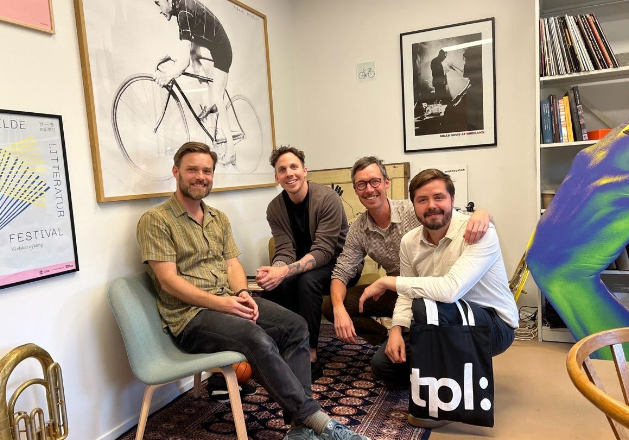
This blog post is a story about the importance of library impact and the importance of sharing your insights and create transparence on your designs and ideas. Hope you’ll enjoy it.
Back in 2021 Roskilde Central Library and consultant agency Seismonaut teamed up with the ambition to change the language for how we talk about the value of libraries and get behind the numbers and expand the language from “how many books did the library lend out” to “what did it mean to the citizens to lend the book”.
Library statistics are important but lending numbers, downloads and foot traffic says something about the use of libraries but not really much about the value and impact that libraries brings to communities. We wanted to expand the picture from use to value. We aimed at both to create significant insights into what the Danish public library actually mean to people and the impact and value the bring to communities but also to inspire other libraries and institutions of culture to adopt this logic, take on the method and design and construct new and local insights and knowledge.
The birth of The Impact Compass
The method we designed builds on a huge British study, Understanding the Value and Impact of Cultural Experiences by The Arts Council England. The Culture Value Impact study contains a meta study of 50 larger projects about the value of culture to condensate what cross the different studies. That has given birth to 4 dimensions of culture which can provide an alternative insight into the value and impact that culture and art provides communities and individuals. The 4 dimensions are:
- The emotional: Awakens feelings and thoughts
- The intellectual: Creates conversations and reflections
- The creative: Inspire and motivates us to create
- The social: Self-cultivation/coherence, togetherness and community
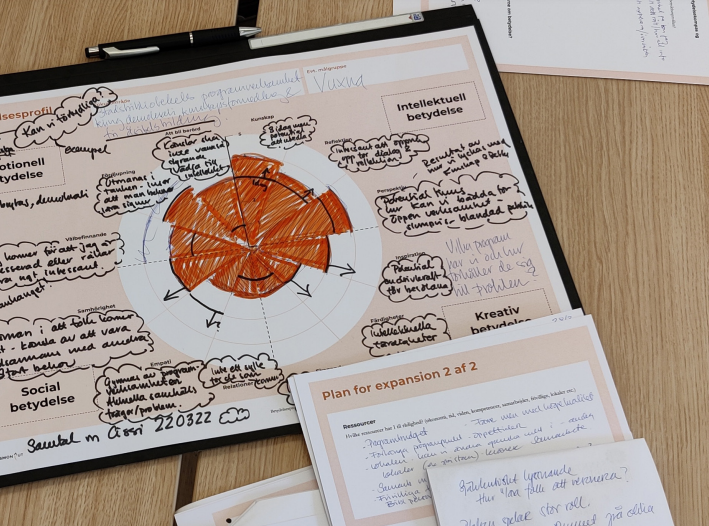
Those 4 dimensions were our scaffold for the design of a new language and from that we have designed The Impact Compass. The Impact Compass is basically a tool for understanding the impact of cultual experience on the public. The Impact Compass consists of 4 dimensions of impact – emotionel, intellectual, social and creative – and 12 parameters (se picture below). Together, they form a framework to reveal what people experience in their encounter with libraries and culture. It helps you to ask the right questions and fully probe the impact of the experience for the public.
With The Impact Compass, you can prepare an impact profile, which can be used to analyse, evaluate and document the impact of the experiences you create. You can create impact profiles at different levels – from a single activity to the institution as a whole.

The results from the study was significant showing that to the citizens in Denmark a library visit is more than a number in the spreadsheet:
- the public library is a haven in everyday life, where citizens find room for contemplation and take time for themselves and each other
- the public library is a credible communicator of knowledge and gives citizens an enlightened and critical perspective on life
- the public library is a place where citizens experience togetherness – alone, or with others – and where they experience that materials and facilities are a common property without financial barriers to use
- the public library is a source of inspiration and stimulates users’ imagination. The public library can also help motivate users to try something new and acquire new skills
Link to blog post on the full results from the Danish study: A haven in our community: The impact and value of public libraries
Sharing is caring
We decided to release the method and design in both Danish and English so that other libraries and cultural institutions could do their own research and since then knowledge about the library’s significance for citizens nationally and internationally has spread like rings in the water.
This spring, we experienced a huge splash in our work when the Toronto Public Library, based on our survey design, investigated what the City of Toronto’s approx. 100 libraries mean something to the 2.6 million citizens who live in Toronto and the surrounding area.

The result is uplifting for the citizens and community of Toronto and shows the importance of the library as the vital lifeblood of the city’s opportunities to grow and thrive. Overall the study found:
- The library is an incredible force to combat social isolation – in a lonely city, it’s a place where everyone is welcome, and different communities and viewpoints converge.
- It’s a place for people to better themselves, where they can tap into programs, services and collections that expand their world and help them achieve their goals. It’s a critical portal to resources and services for the most vulnerable people in our city, who cannot access them anywhere else.
Background, summary and full report and be found here: Measuring the Social Impact of Toronto Public Libraries
I’m so utterly proud that our little brain child has grown so big and has travled so far and to me it is also a strong underlining of the importance of sharing your ideas, methods and designs with peers.
Special thanks to my library impact partners in crime Andreas Linnet and Nicklas Hilding from Seismonaut and Shawn Mitchell from Toronto Public Library
Below futher readings
Cheers
Further readings on the study and the impact compass:
Onepager with main findings
Blog post: A haven in our community: The impact of public libraries
Blog post: The public library is a place with a heart
Interview with IFLA: From usage to impact: Showing how libraries make a difference
Collected documents in English: New study: The impact of public libraries in Denmark
Hands-on guide to The Impact Compass

 The Library Lab
[…] a quiet corner to read with comfortable furnishings and warm lighting. It’s a space where, as Danish writer Christian Lauersen says, “citizens experience togetherness – alone, or with others”. I imagine this space as one […]
LikeLike