This piece is a rewrite of a chronical I wrote for national Danish newspaper Kristelig Dagblad. Link to the original piece (in Danish and behind paywall): https://www.kristeligt-dagblad.dk/debat/bogbussen-er-blevet-en-sjaeldenhed-men-vi-har-brug-naerheden-til-laeserne
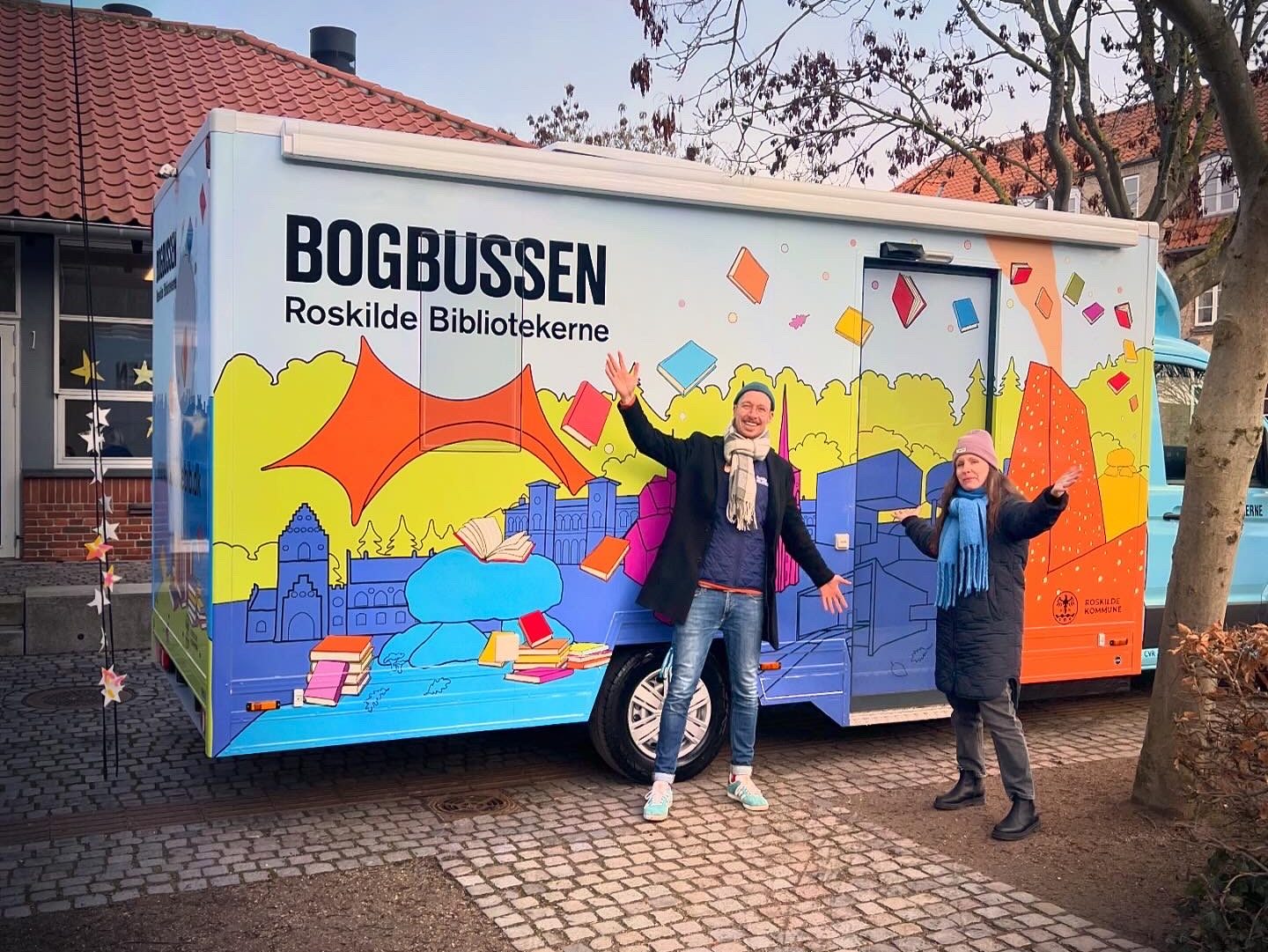
In the middle of Zealand, Denmark, in Roskilde Municipality, a bus filled with books drives around. A good old-fashioned bookmobile that might make many smile nostalgically. Every week, it stops 25 times around the municipality, temporarily turning non-places into places where the local community can gather at the bus stop, chat with one another and the library staff, and borrow books and other materials to take home. An important moment in everyday life – especially in the smaller village communities where there are fewer activities and places to meet.
The bookmobile offers a significant role in citizens’ engagement with and use of culture, community, and libraries: Accessibility. According to Statistics Denmark, the use of public libraries is strongly dependent on how far citizens live from their nearest library. Almost 50% of all library users live within 1,500 meters of their nearest physical public library – kinda wild stats when you think about it.
Thus, a bookmobile is both a practical and strategic prioritization of citizens’ nearness to free and equal access to information, education, and cultural activities. It also ensures access to a frequently overlooked aspect of the Danish welfare society: the access to professional and skilled library staff who can help citizens find relevant literature, music, or films, and create cultural experiences and community frameworks through the events and activities that often accompany the book bus as it stops in the community.

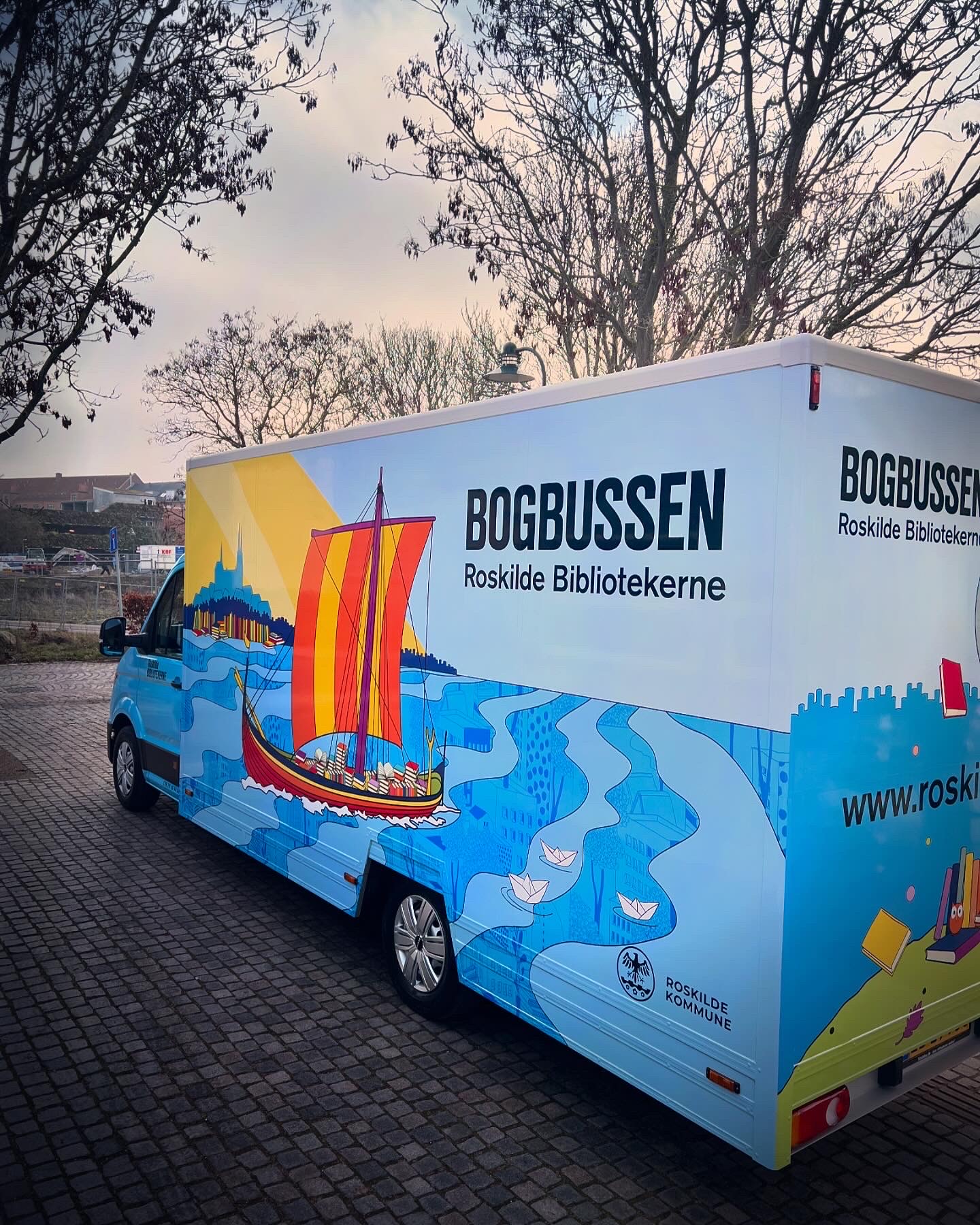
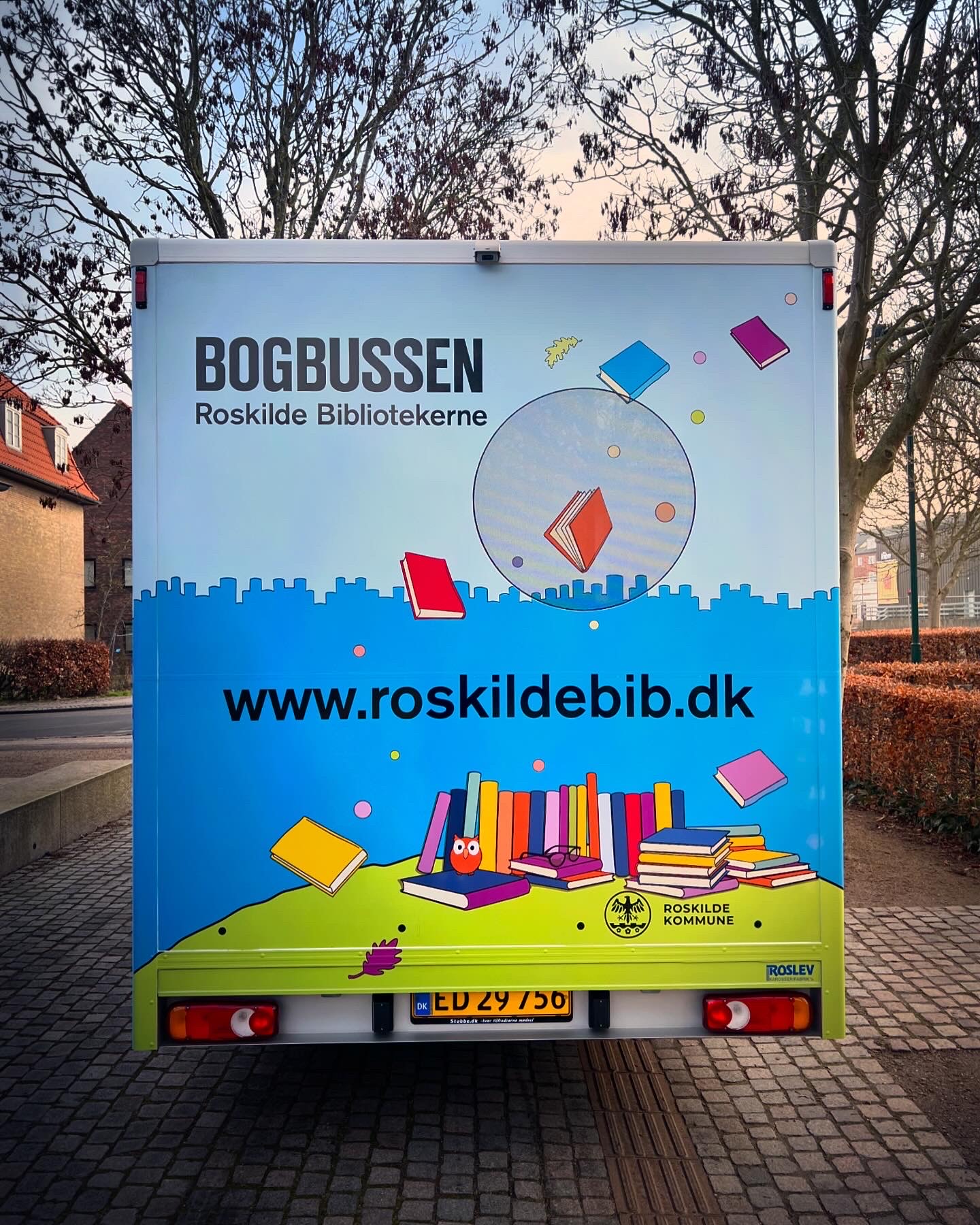
Roskilde Municipality has had a mobile library service since 1947 and a bookmobile since 1971. At the beginning of 2025, the municipality will replace its outdated bookmobile from 2001 with a new one. A rare priority, as this bookmobile is the last of its kind in Zealand. Currently, there are 15 bookmobiles in Denmark, down from 52 in 2000. The same trend can be seen in the number of library branches, where there were just over 1,000 branches in the 1980s, a number that Statistics Denmark reports has dropped to 420 in 2023. The physical proximity and accessibility of our largest cultural institution, measured by visitor numbers, is in a negative spiral. A similar trend is observed in the ability of citizens to receive help from library staff at the public libraries of Denmark; in 2009, there were just over 13,000 weekly opening hours with staffed personnel, but this number had dropped to 9,400 weekly hours by 2023.
This development stands in stark contrast to one of the most debated societal crises of our time – our ability and desire to read.
“If the impossible is to become a reality, we must dream first”
So writes Spanish author Irene Vallejo about the importance of reading in her poetic and sharp Manifesto for Reading (2023). It is a beautiful statement with much meaning and weight when it comes to our joy of reading, opening a book, and letting it carry us to foreign shores, walking in others’ footsteps, or feeling seen and connected in a world where we can feel isolated in the perfect mirror of social media. Reading gives us faith and courage, and it adds depth and new shades to the landscapes of our dreams.
The ability to fantasize, dream, and imagine is a crucial driving force throughout our lives: How can my diet and exercise help me run even faster? How can I become a better father? Can I change some of my habits to lessen my impact on the climate? Without the ability to imagine and believe that things can be better and different than they are now, the hope for a better future faces serious challenges – both for the individual’s natural need to become the best version of themselves in the life they are given and for the challenges and crises of our society.
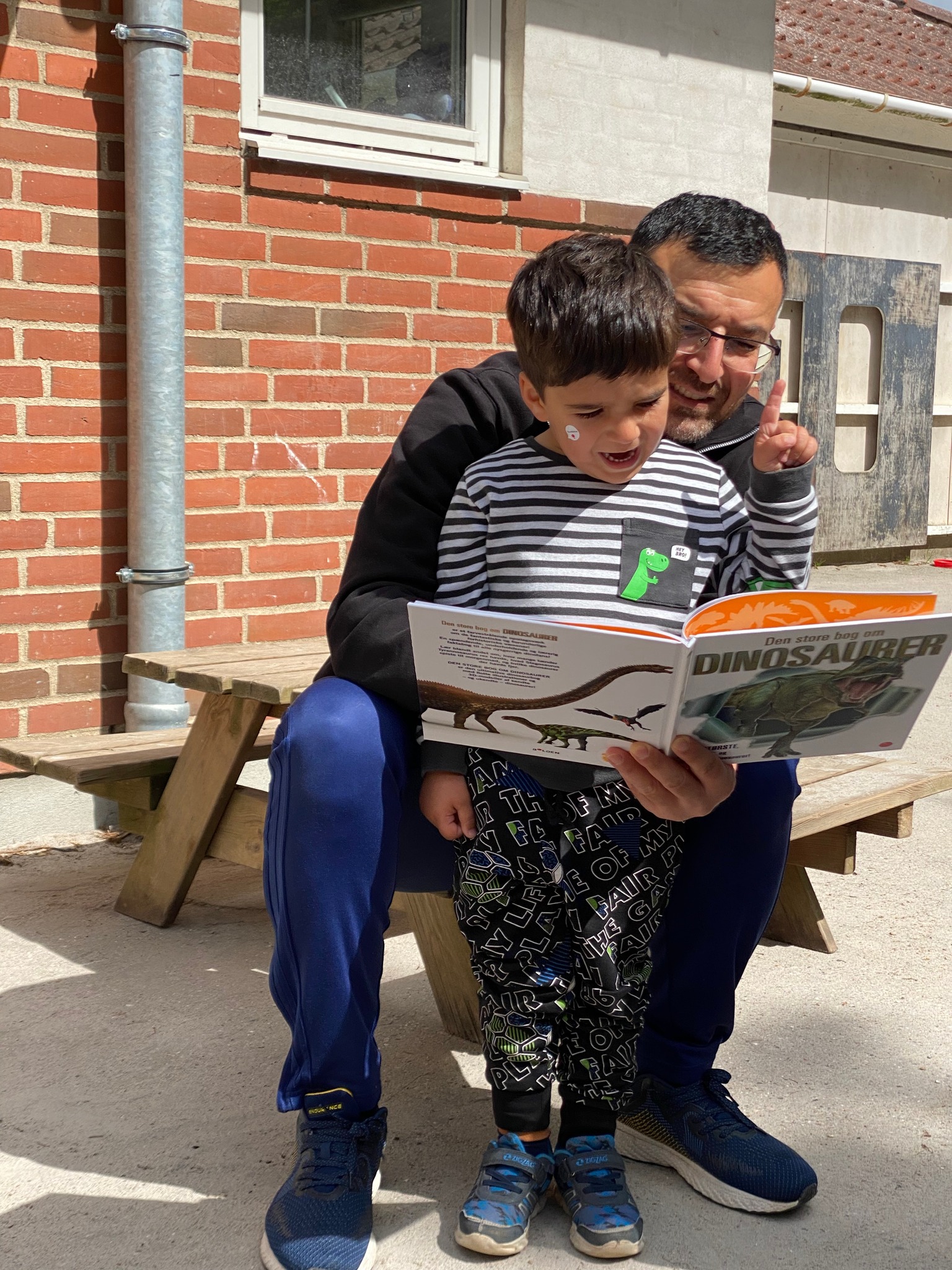
But both the ability and joy of reading do not come on their own and have been steadily declining. According to the much-debated PIRLS study, only one in seven children in the fourth grade say, “they really enjoy reading.” In half of the country’s daycares, using books with the children is not part of everyday life (Learning Environment in Municipal Kindergartens, EVA 2020), and the increasing use of social media is linked to less leisure reading and weaker attention spans (Children and Youth’s Reading 2021, Future Libraries). Almost one in five adults in Denmark has low literacy skills, according to the international PIAAC study, which places Denmark lower than both Norway, Sweden, and Finland.
The consequences extend into the country’s universities, where Professor Siff Pors from the University of Copenhagen recently reported in national newspaper Berlingske that long novels are being replaced by shorter texts on the literature curriculum because students cannot manage to get through longer works such as Pelle the Conqueror.
The book and the human factor
Reading makes us smarter about our lives and about each other, sharpens our ability to concentrate, immerse ourselves, and be present, and has a beneficial effect on our mental health both as prevention and treatment. Reading can challenge us and be the gateway to community.
Back to the 25 stops that Zealand’s only bookmobile visits every week. Here we find the key to two solutions to the reading crisis: proximity and accessibility to books and to people who convey and are passionate about them. The aforementioned statistics from Statistics Denmark speak volumes about the importance of access to books, but believing that accessibility to materials alone will make people rediscover the joy of reading is a fallacy. Well-being, motivation, and habits are relationally driven and largely depend on the influence we receive from other people. The most important element in a strong reading culture is other people to convey the stories and books: the librarian, the school teacher, the educator, and not least, mom and dad and friends.
A bookmobile is of course not the right solution in all municipalities and contexts, but prioritizing access and proximity to books and people, regardless of postal code and income, is crucial to solving the reading crisis and can be achieved in many ways.
With the new book bus in Roskilde Municipality, a new and more flexible schedule will be introduced, allowing for increased collaboration with other actors, forming a third key: partnerships and outreach work.
The public library as a societal institution is an important response to the reading crisis, but no institution can carry the task alone. The crisis calls for a much broader approach, where the collaboration between institutions and actors (libraries, daycare centers, schools, etc.), and citizens’ daily lives (families, friends, associations, etc.) is unfolded and strengthened so that we can truly lay the foundation for a strong reading culture in Denmark.
This should be supported by shared ambitions for reading across sectors and disciplines, both nationally and locally, so that the expertise and resources of the relevant actors can be brought together. It is crucial that these ambitions are backed up by the prioritization of local operating budgets for the relevant institutions so that staff, competencies, and frameworks are in place to implement them. A strong reading culture is a societal investment – not an expense.
Cheers

 The Library Lab